Content
Choosing between aluminum and copper cable looks simple on a quotation sheet, but it becomes a much more interesting question the moment you stand in front of a cable tray with a pulling crew waiting. Both conductors move current from one point to another, yet they behave very differently once weight, bending radius, terminal hardware, humidity and budget enter the room. After more than fifteen years of manufacturing both types, we have watched projects go smoothly and watched others stumble on details that never appear in a headline price comparison.
This guide is written for the people who actually sign off on a cable schedule: design engineers, procurement teams, contractors and facility managers. We will go through the physics, the money, and the practical installation issues, then finish with a checklist you can use before approving a specification.
Copper conducts electricity better than aluminum — roughly 58 MS/m against 35 MS/m at room temperature. To carry the same current, an aluminum conductor needs a cross-section around 1.5 to 1.6 times larger than its copper equivalent. In exchange, aluminum is dramatically lighter and considerably cheaper per unit of current-carrying capacity.
That single trade-off explains most of what you see in the field. Long distribution runs, utility feeders and large fixed installations lean toward aluminum. Panel wiring, control circuits, crowded plant rooms and anything that moves or gets re-terminated often stay with copper. The right answer usually depends less on the metal itself and more on where the cable has to live for the next thirty years.
Before comparing prices, it helps to put the two materials side by side. The table below summarises the properties that most often decide a project. Ampacity figures vary with installation method, ambient temperature, grouping and the standard you work to, so always confirm against the relevant code table rather than a rule of thumb.
| Property | Annealed copper | EC-grade aluminum |
|---|---|---|
| Conductivity at 20 °C | About 58 MS/m (100 % IACS) | About 35 MS/m (61 % IACS) |
| Density | About 8.9 g/cm³ | About 2.7 g/cm³ |
| Cross-section for equal ampacity | Reference size | Roughly 1.5 to 1.6 times larger |
| Weight at equal current capacity | Higher | Roughly 45 to 50 % lighter |
| Typical resistivity | About 0.0172 Ω·mm²/m | About 0.0282 Ω·mm²/m |
| Thermal expansion | Lower | Higher, so terminations need attention |
The practical reading is straightforward: aluminum is not a cheap substitute for copper, it is a different engineering choice. Oversizing the conductor is normal and expected, and once you account for that, the comparison becomes fair.
Copper prices move quickly, and a feeder that looked affordable at tender stage can look very different by the time the cable is delivered. Aluminum is generally less volatile and cheaper per ampere of capacity, which is why utilities and large industrial projects have used it for decades. When a run is hundreds of metres long and the cable sits in a trench or on a rack, the saving is not marginal.
Weight matters more than people expect. A lighter cable means fewer supports, lower pulling tension, smaller reels, lighter drums and less manpower on site. On long vertical risers or roof-mounted runs, that difference can decide whether a route is feasible at all. We covered the commercial side of this in more depth in our note on protecting cable budgets when copper prices swing, which is worth reading alongside this comparison.
There is a counterweight, of course. Larger aluminum conductors take up more space in trays, need bigger bending radii and require more careful support spacing. On a congested retrofit, that extra bulk can cost more than the metal saves.
Copper remains the default for a reason, and it is not nostalgia. These are the situations where we usually advise customers to stay with it:
In short, copper is the better tool when space, flexibility and termination density are the constraints. Aluminum is the better tool when length, weight and budget are the constraints.
Almost every aluminum problem we are asked about turns out to be a termination problem rather than a conductor problem. Aluminum forms a tough oxide layer within minutes of exposure to air, and that layer is a poor conductor. The metal also creeps slowly under sustained clamp pressure, so a joint that was tight at commissioning can loosen after months of thermal cycling.
The fixes are well known, but they are only effective when followed consistently. Brush the oxide off and apply a suitable antioxidant compound immediately. Use lugs and connectors rated for aluminum, or bimetallic connectors where the transition to copper is unavoidable. Torque to the manufacturer's figure with a calibrated wrench, and re-torque after the first load cycles. Keep bare aluminum away from copper in damp or salty atmospheres, where galvanic corrosion will find the joint long before the conductor fails.
Copper has its own weaknesses — it work-hardens, oxidises in sulphur-rich environments and is heavier — but its termination behaviour is more forgiving, which is why electricians often prefer it for short, fiddly connections.
The table below is the shortcut version we use in early project discussions. It is a starting point, not a substitute for the design calculation.
| Application | Usual choice | Main reason |
|---|---|---|
| Long buried distribution feeders | Aluminum, often armored | Lower cost per ampere, lighter pulling load |
| Panel, control and interlock wiring | Copper | Tight bends, frequent terminations |
| Transformer-to-switchgear runs | Either, judged on space | Aluminum where tray capacity allows |
| Solar DC strings and array cabling | Tinned copper, small sizes | Connector compatibility and handling |
| Welding, pumps and portable tools | Copper, rubber sheathed | Flex life and abrasion resistance |
| High-voltage substation lines | Aluminum or copper by design | Weight, span and fault level decide |
Because we manufacture both conductor families in Yixing, we rarely push a customer toward one metal. Our aluminum wire and cable range covers single-core building wire through to armored medium-voltage feeders, and it is usually where the long-run projects end up.
For light distribution and building work, the BLV single-core range is a common starting point, with stranded aluminum for panel feeds and service entries.
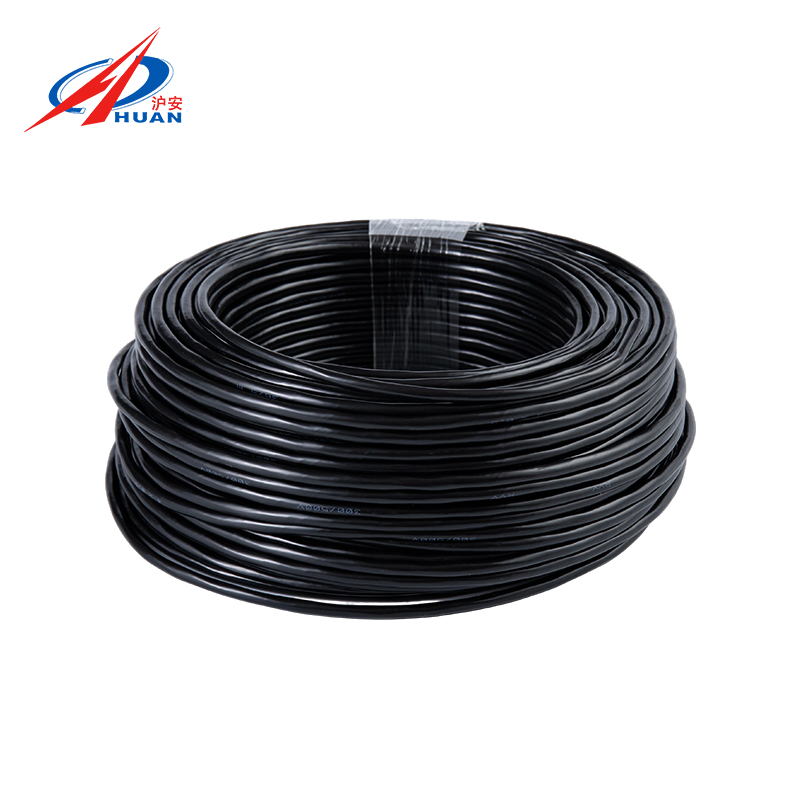 BLV Single-Core PVC-Insulated Aluminum WireFor light distribution and building wiring, this PVC-insulated aluminum single-core wire comes in 16–70 mm² sizes and multiple colors.View Product →
For buried and ducted feeders where rodents and mechanical damage are a real risk, the YJLV22 steel-tape armored aluminum cable is a frequent choice on our lines.
 YJLV22 Steel-Tape Armored Aluminum Power CableFor buried and ducted feeders exposed to rodents and mechanical damage, this 0.6/1 kV XLPE-insulated aluminum cable adds double-layer galvanized steel-tape armor for direct burial.View Product →
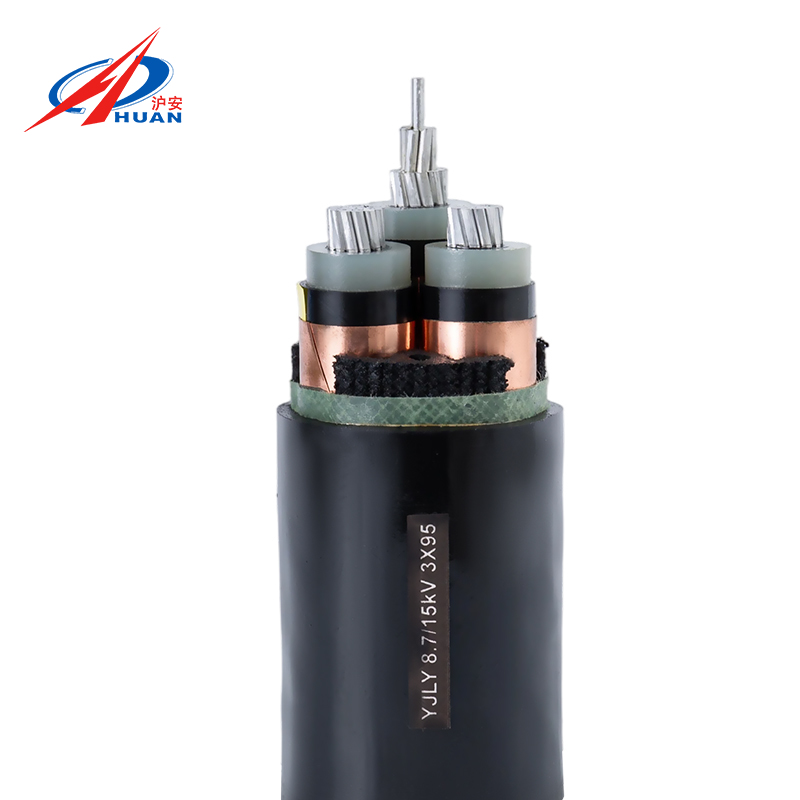
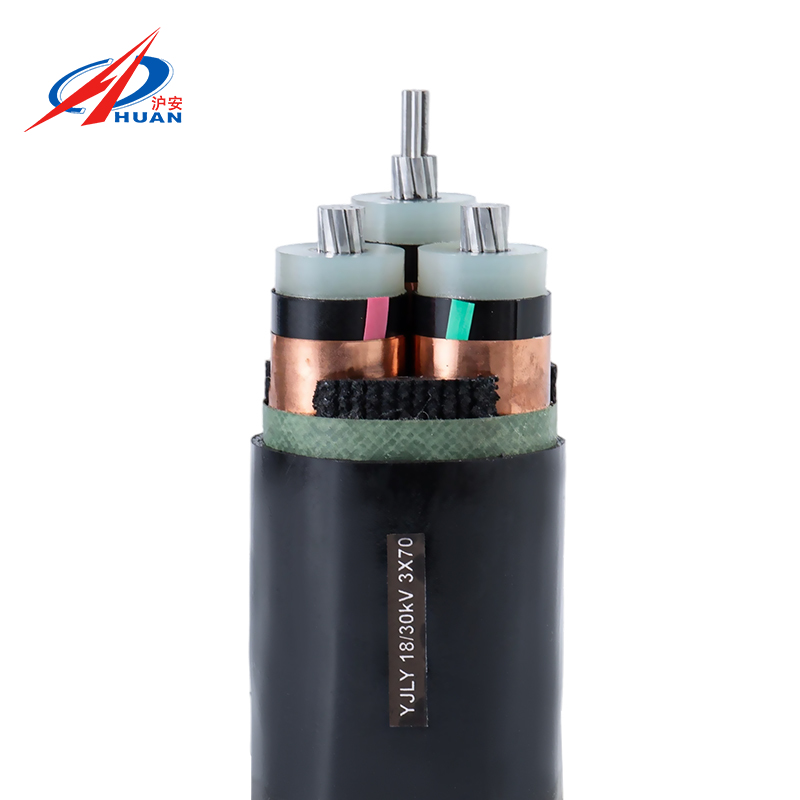
And when a run needs a little more voltage headroom or has to sit outdoors in strong sun, the 7 kV aluminum XLPE cable with a UV-resistant PE sheath tends to fit better than a standard PVC-sheathed product.
YJLY UV-Resistant 8.7/10 kV Aluminum CableFor outdoor distribution runs needing more voltage headroom and sun resistance, this XLPE-insulated aluminum cable uses a UV-resistant PE sheath for overhead or tray installation.View Product →
For higher voltages, our thick steel-wire armored 26 kV to 35 kV aluminum cables cover substation and main-line duties where pulling weight and mechanical protection both matter.
Not bare to bare in most cases. Use a bimetallic transition or a connector rated for both metals, and keep the joint dry. Direct contact in humid or coastal air is where galvanic corrosion starts.
Yes, when it is specified with the right cross-section, installed with correct supports and terminated properly. The failures people remember are almost always joint failures rather than conductor failures.
For larger feeders and fixed distribution in many jurisdictions, yes, subject to local code. For small branch circuits and domestic wiring, copper is usually the sensible and sometimes the only permitted choice.
Aluminum cable versus copper cable is not a debate to be won but a decision to be matched to the job. If the run is long, the budget is tight and the installation is fixed, aluminum usually earns its place. If the space is tight, the terminations are many and the cable has to move, copper remains the safer bet. Most real projects end up using both, and that is perfectly normal.
If you are weighing the two for a specific route, bring us the current, the length, the installation conditions and the terminal details. We will tell you honestly which conductor we would put in that tray.
READY TO CUSTOMISE YOUR CABLE PRODUCTS?
If you are interested in our products, please leave us a message. We look forward to providing you with professional services!
Shanghai Hu'an Cable (Wuxi) Co., Ltd. is a rapidly developing professional and group oriented enterprise in the field of wire and cable. Also, it is a group company that integrates wire and cable design, R&D production and manufacturing. Electrical Cable Factory in China.
Quick Links
Product List
Contact Info.

Tel.:
+86 (0)510-80336668

Whatsapp:
+86 139 1729 9018

E-mail:
good@huancabletop.com

Address:
No. 3 Shuguang Road, Industrial C Zone, Guanlin Town, Yixing City, Wuxi City, Jiangsu, China
QR Code

 English
 中文简体
 عربى
 中文繁体
 한국어
 日本語
 русский
 Français
 Español
 Português
 Deutsch
 +86 (0)510-80336668